


MOR® Mini Implants vs Intra-Lock® MDL®: Best Mini Implant Options for Overdentures
When selecting a mini implant system for overdenture stabilization, understanding your options helps you provide appropriate treatment. Two systems have established themselves in this space: Sterngold's MOR® mini implants and BioHorizons' Intra-Lock® MDL® system. Both address the growing need for affordable, minimally invasive implant solutions for edentulous patients seeking denture retention.
The choice between these systems extends beyond simple size comparisons. The broader decision of mini dental implants vs regular implants also matters. For patients unable to pursue conventional treatment due to cost, bone volume limitations, or medical considerations, these systems offer a vital alternative.
MOR® & MOR-A® Mini Implants: Proven Versatility
Sterngold developed the MOR® system to provide accessible implant-retained overdenture treatment. Many patients decline conventional implant options due to cost or fear. MOR® addresses both concerns.
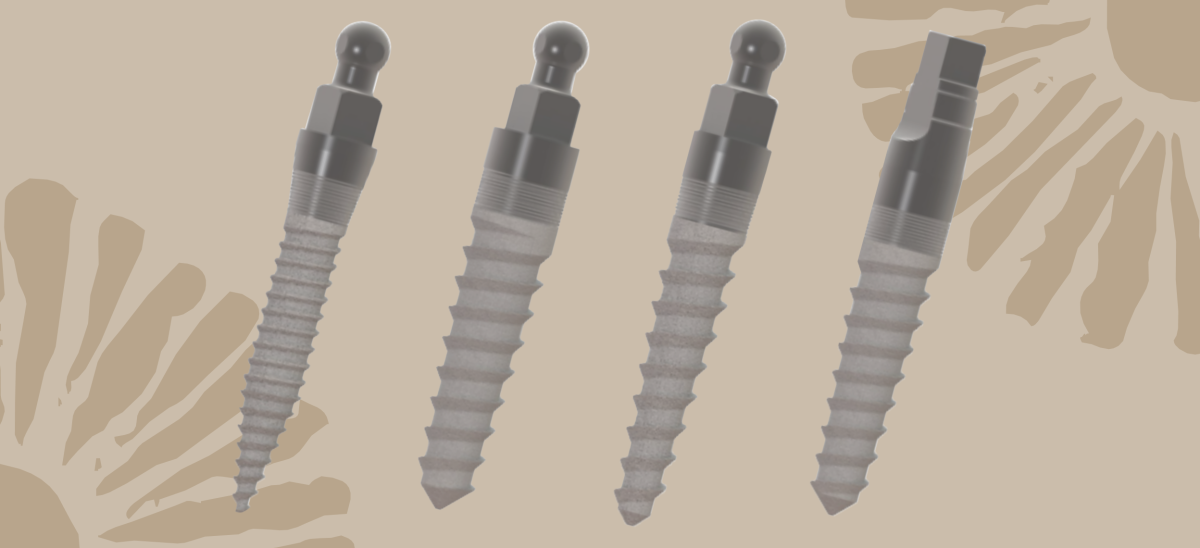
The MOR® system offers two distinct configurations. The standard MOR® implant features an O-ball denture connection designed for overdenture applications. The MOR-A® variant features a tapering post connection specifically designed for crown and bridge replacement.
- Specifications: These small-diameter dental implants range from 2.1 mm to 3.0 mm. They are a one-piece design indicated for long-term use in full and partial removable dentures. The MOR-A® is available exclusively in 3.0mm diameter for crown and bridge work.
- Surgical Protocol: The procedure is minimally invasive, often utilizing a flapless approach. The protocol involves creating a pilot osteotomy approximately one-third to one-half the implant length using a specific pilot drill. Primary stability is achieved at 35 Ncm or above, which can be verified with a torque wrench. Recommended torque limit is 55 Ncm.
- Immediate Loading: The system is designed for immediate load. Patients can often go home with their implant-secured dentures on the same day if adequate stability is achieved.
- Restorative Options: The restorative process is simplified using Sterngold's self-curing EZ PickUp™ material. This bonds the denture caps directly to the mouth. For crown and bridge cases, the MOR-A® includes a temporization cap. It serves as both a carrying tool and a temporary crown base. This straightforward approach reduces chair time and allows for immediate function.
Intra-Lock® MDL® System: Advanced Surface Technology
The MDL® (Mini Drive-Lock) system distinguishes itself through proprietary surface treatment. It also features specific cutting designs intended to aid insertion and healing.
- Specifications: The MDL® system offers implants in 2.0mm and 2.5mm diameters.
- Technology: These implants feature the Blossom™ cutting design, which allows the implant to continually cut through bone with efficiency and minimal force. This design helps distribute cutting force evenly along the implant body. Additionally, the Ossean® surface is impregnated with calcium phosphate to create a bioactive structure that may facilitate faster healing.
- Surgical Protocol: The protocol uses a 1.2mm pilot drill at 1200 RPM to breach the cortical plate to approximately one-third of the implant length. Implants are inserted at 15 RPM or less, with a recommended torque limit of 35 Ncm.
- Restorative Versatility: Beyond overdentures, the MDL® system supports cementable abutments in straight and angled versions (including 15°), as well as plastic abutments for custom cast bridges.
Head-to-Head Comparison
While both systems are effective for stabilization, they serve slightly different clinical needs.
| Feature | Sterngold MOR® | Intra-Lock® MDL® |
| Diameter Options | 2.1mm – 3.0mm | 2.0mm, 2.5mm |
| Surface Treatment | SGE Surface (Acid Etched) | Ossean® (CaP impregnated) |
| Thread Design | Self-Tapping Design for Enhanced Primary Stabilization | Blossom™ Cutting Design |
| Primary Indication | Overdentures & C&B | Overdentures & Cement-Over C&B |
| Surgical Approach | Flapless, 1/3-1/2 depth pilot | Flapless, 1/3 depth pilot |
| Target Torque | 35 Ncm (55 Ncm max) | 35 Ncm |
Understanding Mini Dental Implants vs Regular Implants
To make the best choice for your patient, it is crucial to understand the functional differences between mini dental implants and regular implants.
- Size and Bone Requirements: Regular implants typically measure 3.25mm to 5mm in diameter, while mini implants are usually under 3mm. This smaller size allows mini implants to be placed in patients with lower bone density without the need for grafting.
- Invasiveness: Mini implants often require less drilling and are less invasive, which appeals to patients who are afraid of surgery or have health concerns.
- Functionality: While regular implants are ideal for full chewing load and single tooth replacement in posterior areas, mini implants are excellent for stabilizing lower dentures. However, mini implants may not withstand the same bite force as traditional implants in heavy chewing areas.
Making the Right Choice for Your Practice
Choosing between MOR® and MDL® depends on your specific case requirements.
Choose Sterngold MOR® when:
- Cost and Simplicity are Key: The MOR® system is positioned as an affordable, simple solution that addresses the financial constraints of many edentulous patients.
- Immediate Denture Stabilization is the Goal: With its specific design for overdentures and EZ PickUp™ protocol, MOR® streamlines the process of securing loose dentures.
- Crown and Bridge Work in Narrow Spaces: The MOR-A® variant with its 3.0mm diameter and tapering post connection provides a robust option for fixed restorations.
- You Need Larger Mini Options: The availability of a 3.0mm diameter provides a robust option for sites that can accommodate slightly more width.
Choose Intra-Lock® MDL® when:
- Fixed Restorations are Required: If you plan to use cement-over abutments for crown and bridge work in narrow spaces, MDL® provides the necessary components.
- Bone Density is a Concern: The Blossom™ cutting design is engineered to reduce insertion torque, which can be beneficial in dense bone.
- Bio-Active Surfaces are Preferred: The Ossean® surface offers a technological advantage for clinicians focused on surface-mediated osseointegration.
The Bottom Line
Both MOR® and MDL® systems represent viable options for implant-retained overdenture treatment. MOR® offers proven performance, straightforward protocols, and cost-effective solutions focused primarily on overdenture applications, with the MOR-A® variant expanding capabilities to crown and bridge work.
Your choice should reflect your practice's specific needs, existing product relationships, and patient demographics. The most important factor isn't which system you choose, but that you offer appropriate mini-implant treatment to qualifying patients. By incorporating mini implant treatment into your practice, you provide meaningful solutions that improve patients' quality of life.